BOP (BARTENDERS OF PONY)
BOP (Bartenders of Pony) marks our first collaboration with the Jigger & Pony Group and award-winning bartender Uno Jang, translating Korean cultural values and spatial traditions into a contemporary bar environment designed for repeated visits and genuine connection. Rather than reproducing Korean aesthetics literally, we approached BOP as a study in spatial behaviour and cultural memory. Working closely with Uno, the design draws from Korean craft traditions, domestic spatial organisation, and material sensibilities, expressed through contemporary design details and layered surfaces that feel lived-in rather than staged.
The brief provided by Uno centred on three Korean values: Kki (craft), Jeong (heart), and Heung (energy). Our task was to make these ideas spatial, where precision in construction, warmth in material choice, and social fluidity in how the space unfolds characterise the essence and approachability of the venue. We spent time talking about and understanding how Korean hospitality happens spatially, and how that might translate for and in the Singapore context. The collaboration centred on authenticity over overt representation. We worked with Uno to identify which Korean cultural elements carried genuine meaning: from the progression and layout of traditional domestic spaces to the tactile qualities of Korean textiles and the emotional role of colour and light.
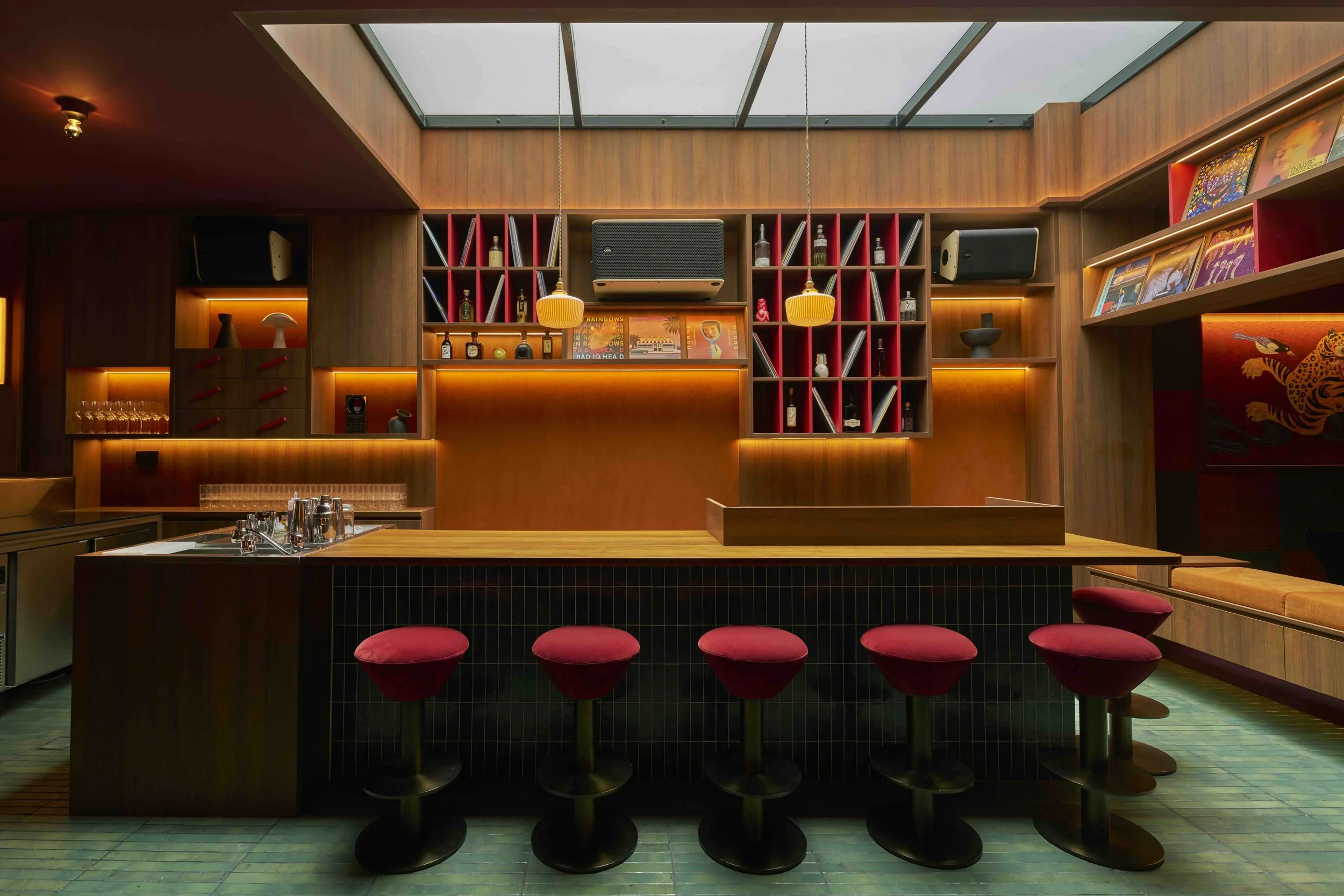
Working within a linear heritage Singapore shophouse footprint, we organised BOP into four distinct zones inspired by classical Korean domestic progression, from public reception to innermost retreat. The design embraces the narrow proportions of the unit, creating a journey that starts with high social energy and progresses to spaces that allow for more intimate conversation.
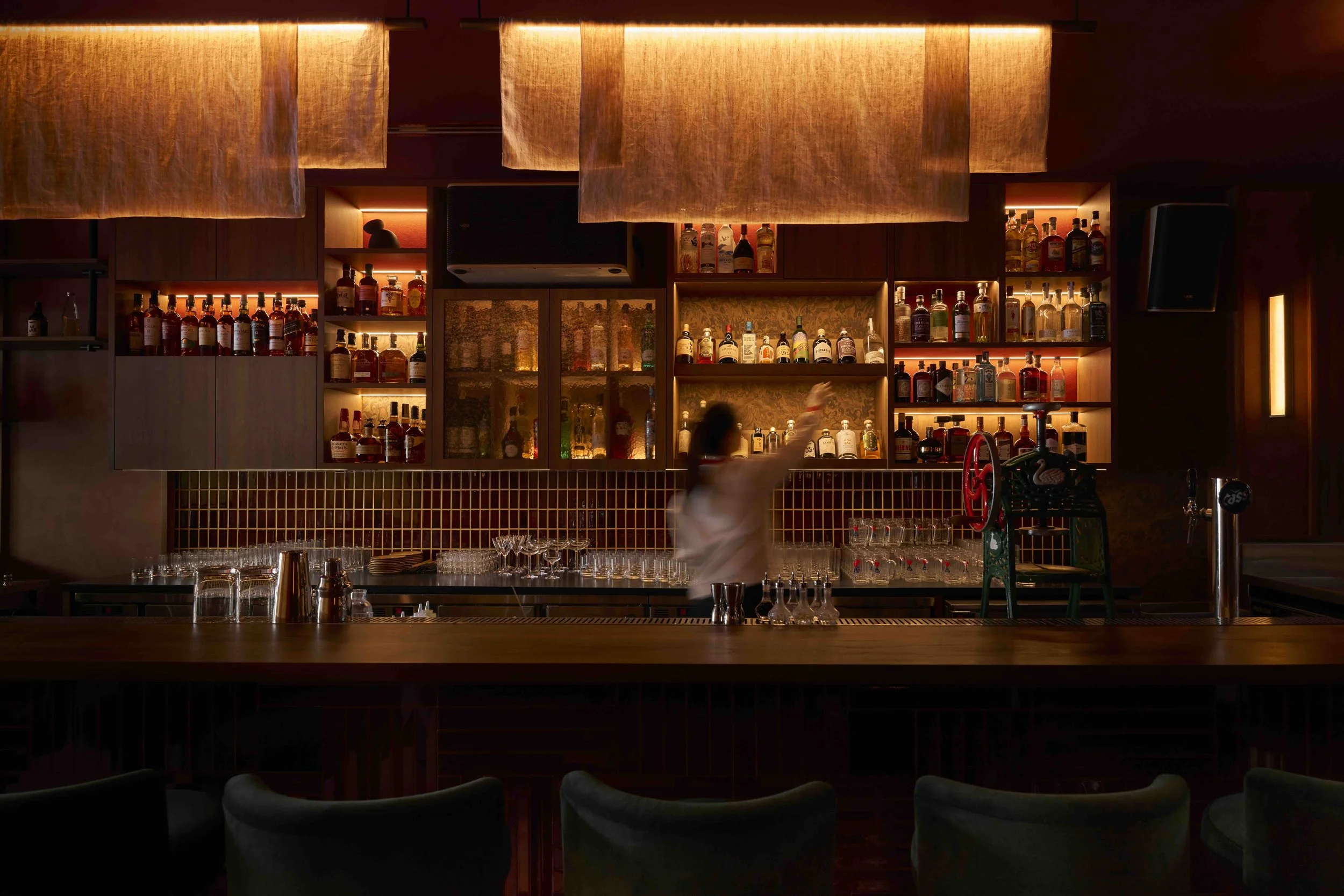
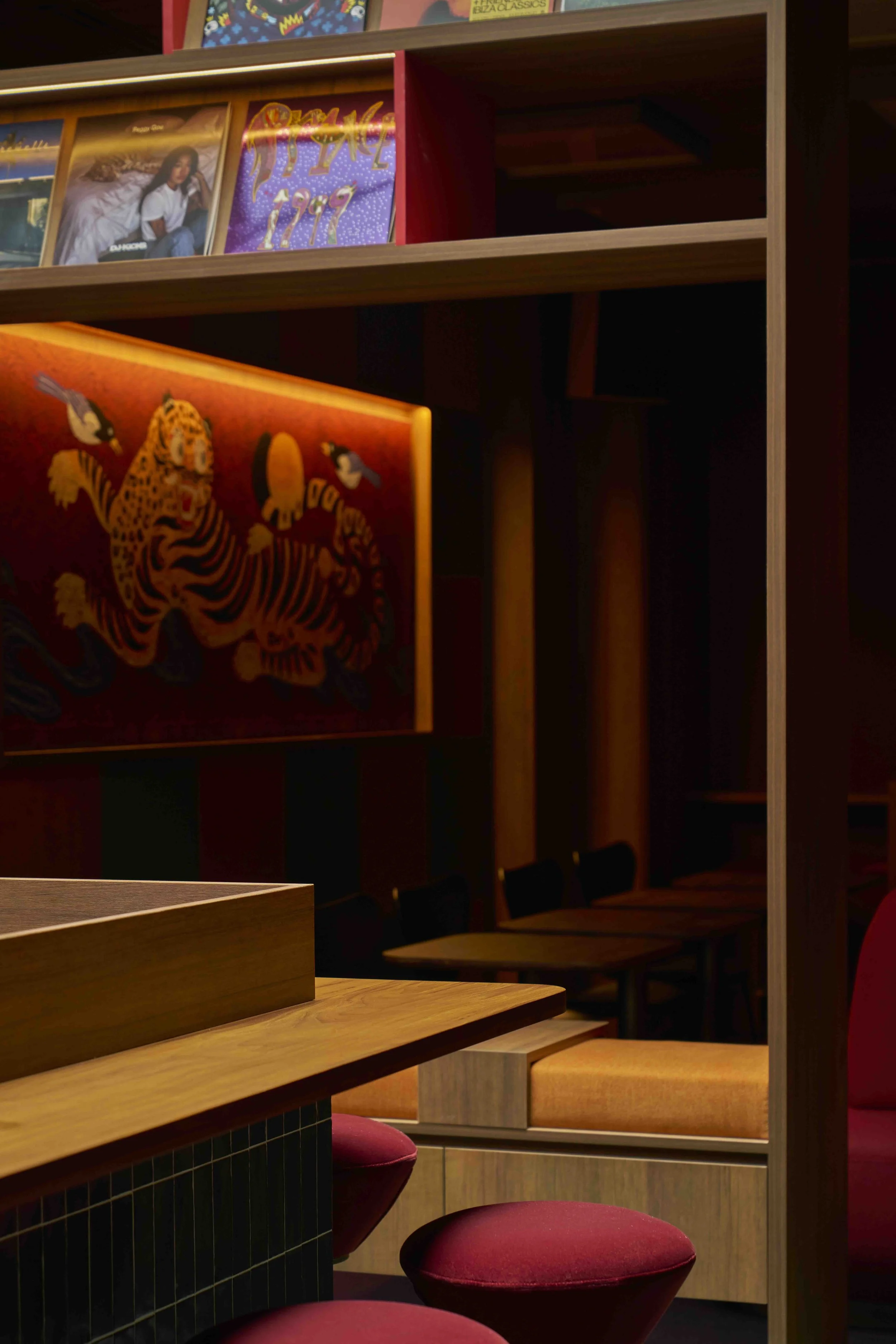
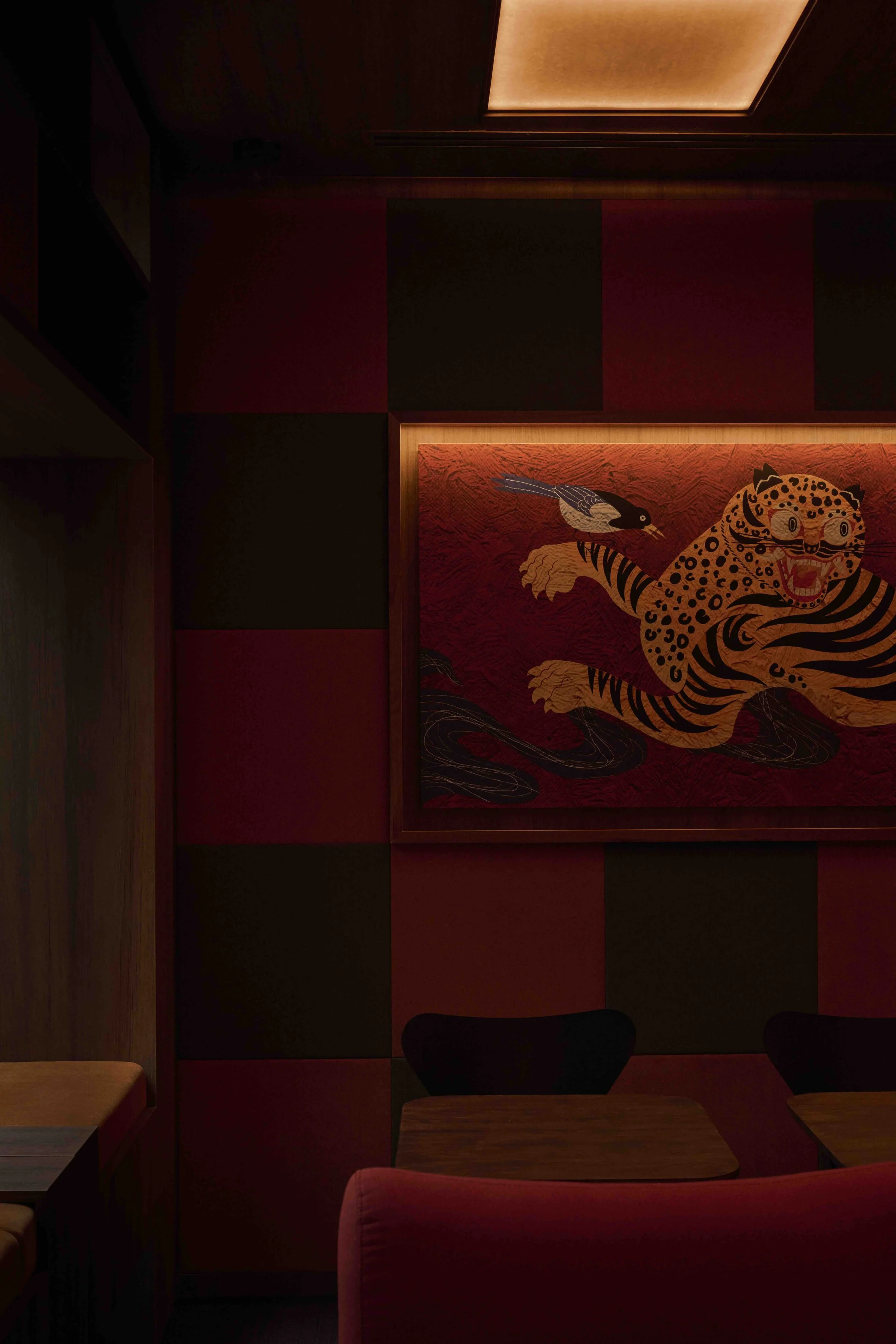
We developed a material and colour palette in dialogue with Uno’s vision for BOP, referencing Korean textile traditions and folk art (minhwa). Tiling pattern, wall coverings and curtains in the space draw inspiration from jogakbo, a traditional Korean patchwork that is often used to create bojagi (wrapping cloth), and is applied both as pattern as well as principle: layering, protection, and consideration. These textile surfaces create acoustic softness while establishing visual warmth. Timber-cladded surfaces provide tactile depth and craft presence. Custom cabinetry, modular shelving, and joinery details demonstrate precision without over-ornamentation.
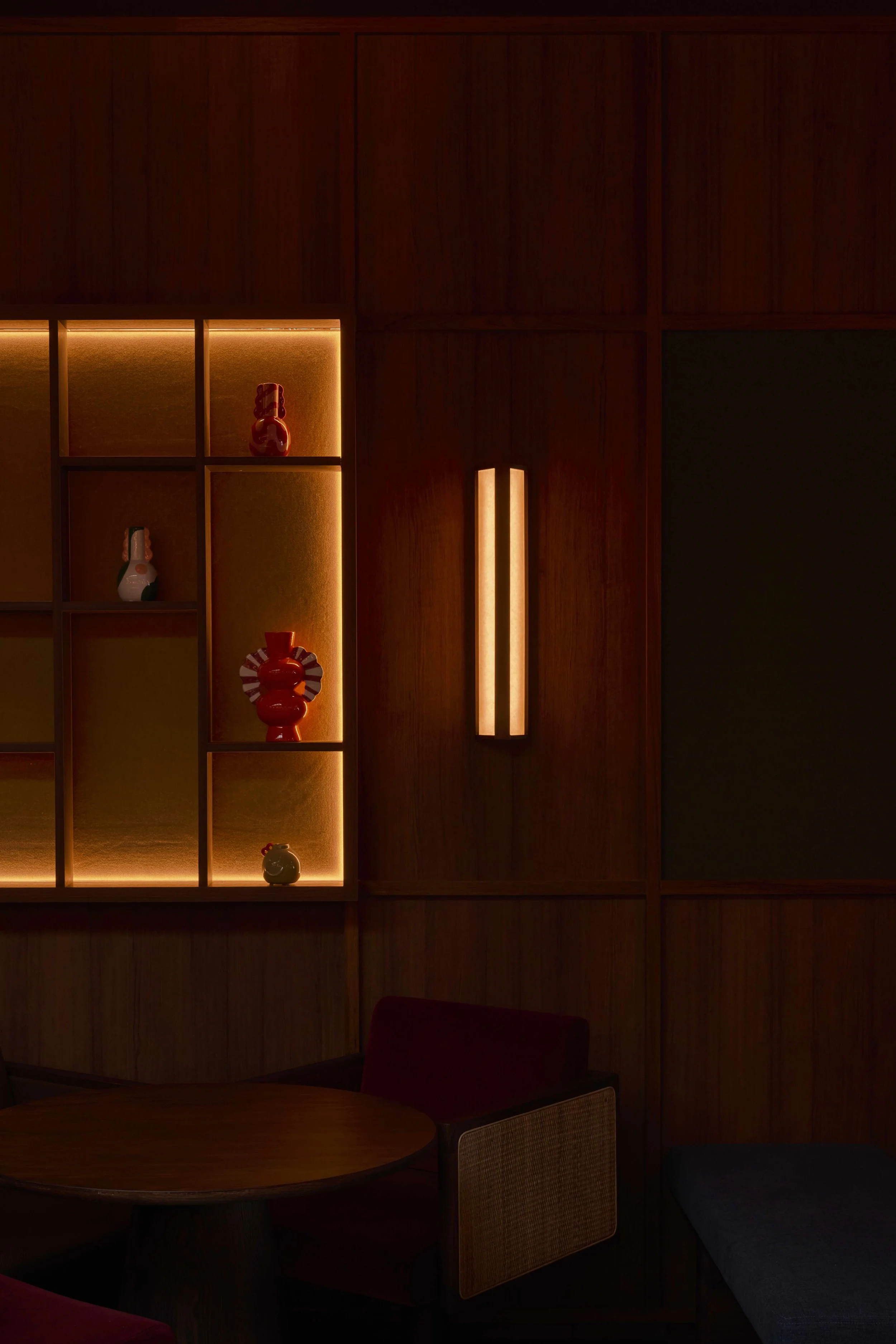
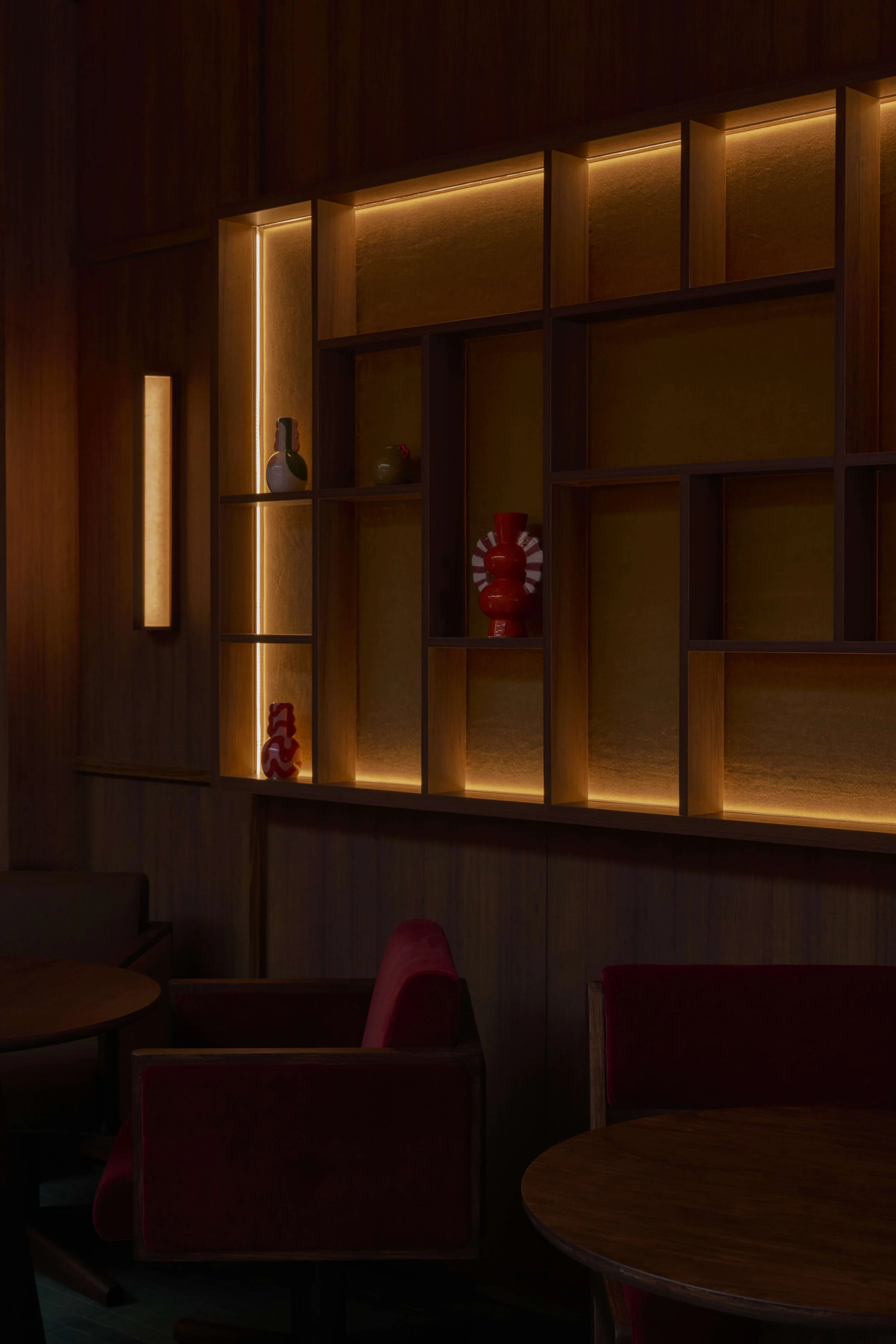
The colour palette of honeyed wood, soft beiges, muted greens, lively ochres, earthy terracotta, dark blues, and deep reds is celebratory yet not loud and draws from obangsaek (Korea's traditional colour spectrum) and dancheong (the multicoloured decorative paintwork found on historic Korean wooden architecture). Patterned wall panels and built-in shelving details reference Korean geometric principles, latticework and joinery, which are rendered in contemporary materials and scale, a "newtro" approach that reinterprets heritage motifs through modern design language.
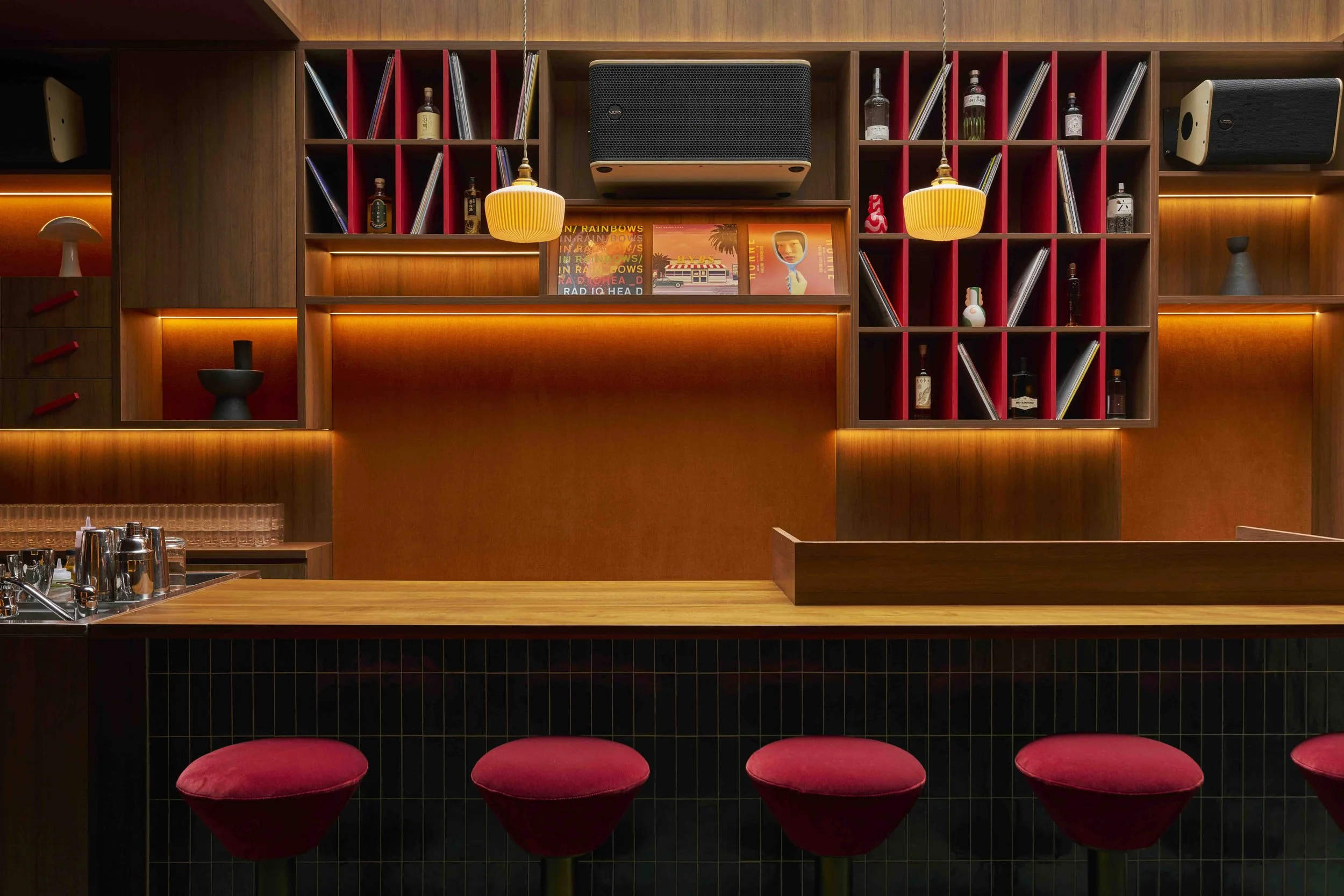
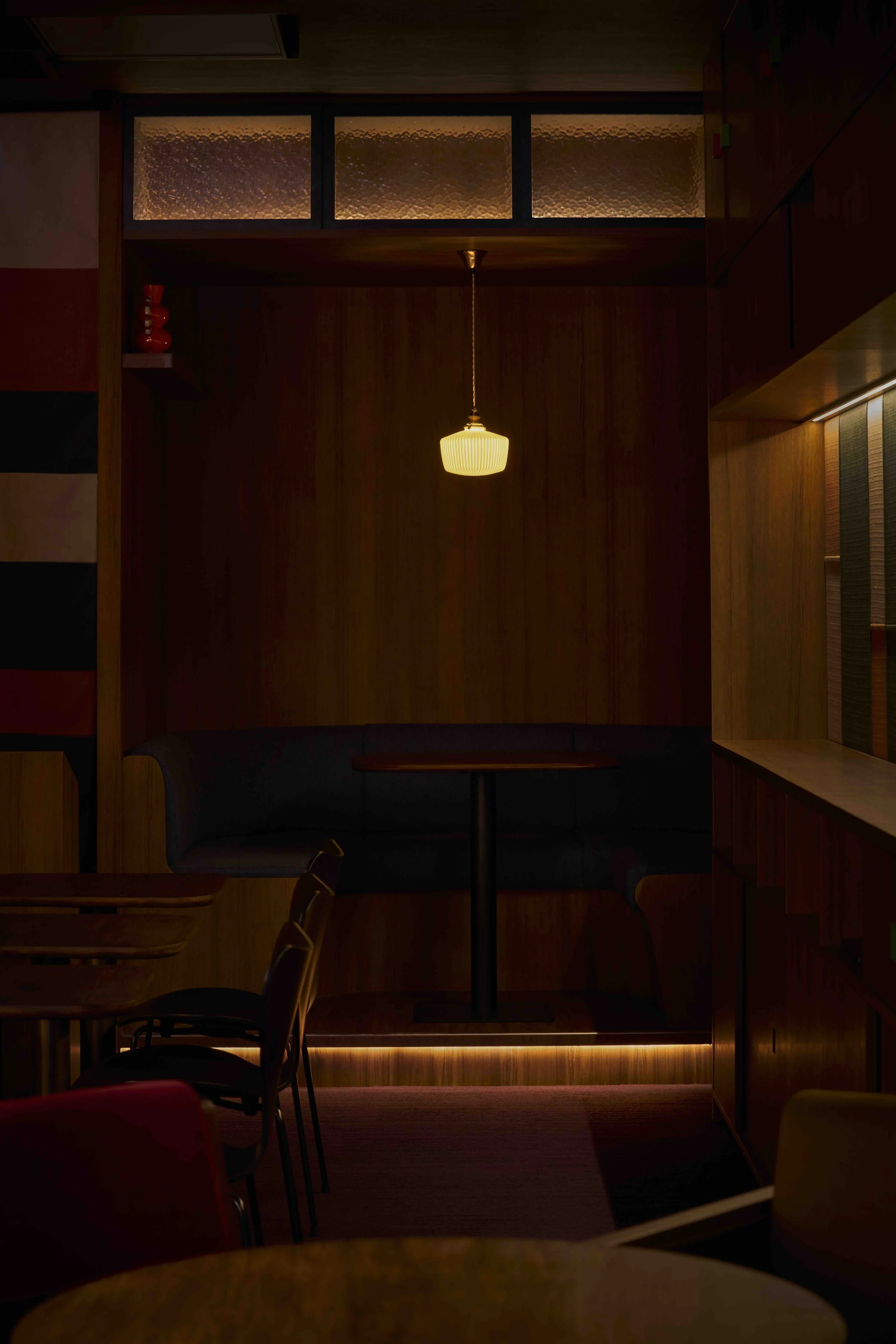
We designed nearly all furniture and lighting elements specifically for BOP, from barstools and sofas to tables, ceiling lamps, and wall lamps. Only the Fritz Hansen Series 7 chairs and ceramic pendants were sourced externally, with all other pieces custom-developed to support the space's spatial rhythm and material language. Designing the furniture allowed us to control proportion, materiality, and user experience as each piece needed to work hard operationally while maintaining the warmth and human scale central to the concept, as well as being able to fit into the tight space. The barstools, for instance, needed to support long conversations, while the sofas had to transition seamlessly from drinks to dining, and even allow for larger groups to casually and comfortably perch on the armrests.
Lighting is warm and soft to create an inviting yet intimate atmosphere, with traditional paper made from mulberry bark acting as lighting diffusers in the custom wall and ceiling lamps. The linen drapes of the pendant lamps at the main bar, textile upholstery, wall treatments, and spatial zoning manage both atmospherics and acoustics, allowing the bar to feel lively without overwhelming conversation. The design adapts fluidly from early evening to late night, supporting both drink-led and food-led experiences without requiring drastic operational adjustment.
Photography by: Lauryn Ishak